July 22, 2026

What Is an eCRF (Electronic Case Report Form)?

This article has been written by

An eCRF, or electronic case report form, replaces the traditional paper CRF.

By significantly improving data quality, it simplifies the verification and consolidation of clinical trial data within a secure system. Today, it is considered the benchmark for data collection in clinical trials and clinical investigations, whether prospective or retrospective.

Paper CRF vs. eCRF: What Are the Impacts on Data Quality?

The traditional paper CRF process involves several risk-prone steps: manual completion followed by data entry into a system. This dual process inevitably creates risks of transcription errors, incomplete or misplaced forms, and significantly extends the time needed to access data, as well as the cost of data acquisition and monitoring.


By contrast, the eCRF enables direct entry, secured by real-time checks and systematic timestamping. It improves data completeness and overall integrity. For teams, this also means the ability to monitor remotely and maintain a much smoother, continuous follow-up process.


Beyond reliability, the operational benefits of an electronic case report form are significant: standardization, instant access, and automatic validation reduce queries and corrections, while also enabling a much faster database lock.

What Are the Main Differences Between an eCRF and an EDC?

The terms  eCRF and EDC are usually used as synonyms, when in fact they each represent different elements within the same environment.


EDC (Electronic Data Capture) is the platform used to collect, centralize, secure, and manage all the data for a clinical study. It includes the functionalities needed for data management, quality control, change tracking, data exports, and with EasyMedStat, statistical analysis.


eCRF (Electronic Case Report Form), on the other hand, is the data-entry interface used by investigators or research teams to record data for each participant. It is the electronic form in which clinical observations, examinations, treatments, or adverse events are recorded.

In short: the eCRF is the data-entry interface, while the EDC is the platform that hosts and secures the data.

How Does an eCRF Work in an EDC?

Connected to a secure database within the EDC, the eCRF is also subject to automatic validation rules and reporting tools.


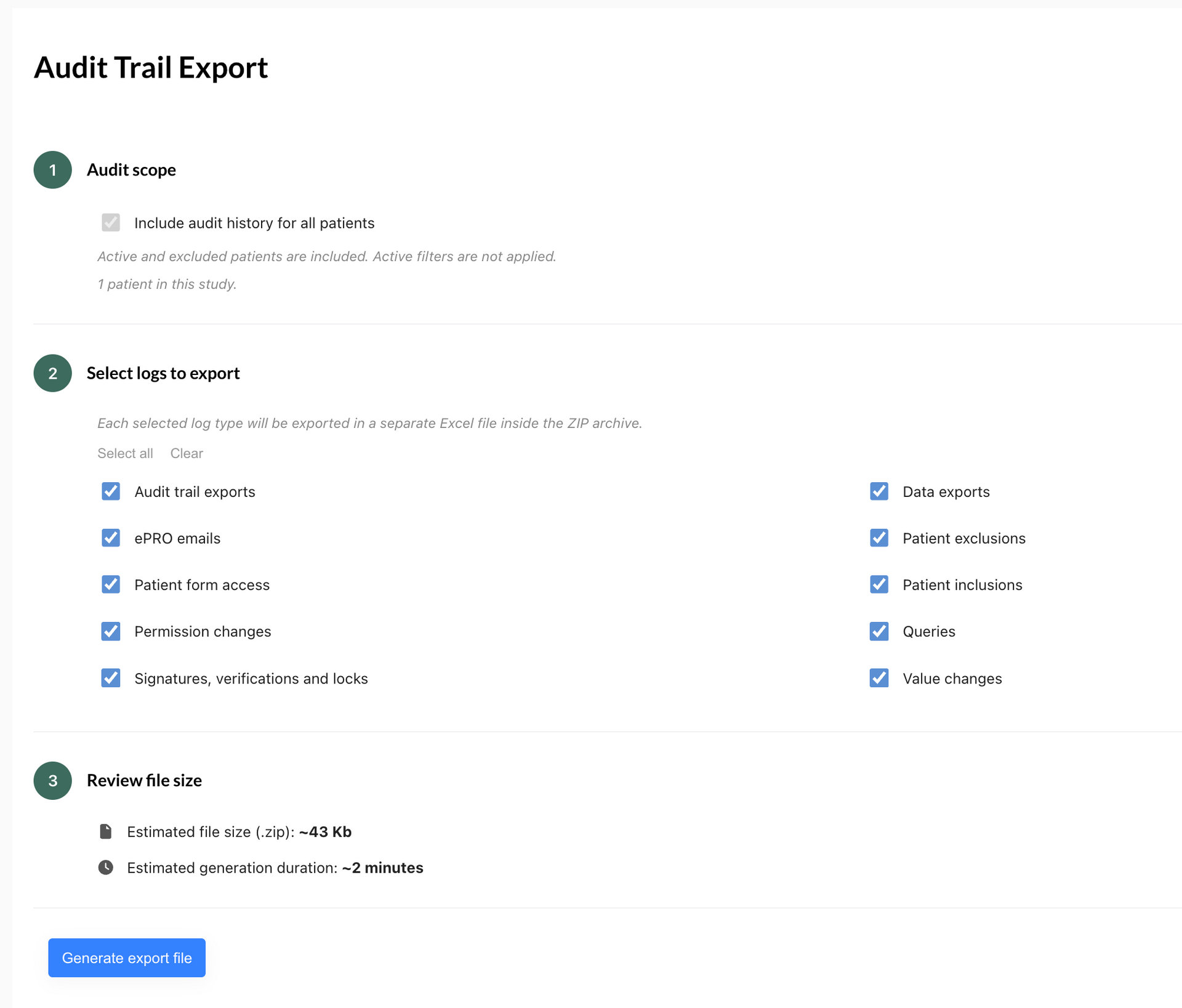
Different user profiles, such as clinical research associates, investigators, data managers, and biostatisticians, control entry, review, and export permissions, while an audit trail records every modification, who changed what and when, to ensure regulatory compliance.


This type of real-time control, combined with checks on expected values, required fields, and cross-field consistency, helps reduce errors.

What is an eCRF in clinical trials ?

The use of an eCRF in a clinical trial is governed by a demanding regulatory framework designed to guarantee the integrity, traceability, confidentiality, and quality of the data collected.


An eCRF must comply with Good Clinical Practice (ICH-GCP), which notably requires full traceability of any changes made to the data, via an audit trail, and protection against unauthorized modification or deletion.


In Europe, clinical trials involving medicinal products are governed by Regulation (EU) No 536/2014 on clinical trials. For clinical investigations involving medical devices, ISO 14155 is the international reference standard for Good Clinical Practice.

In the United States, electronic data collection systems used in clinical trials must also comply with the requirements of FDA 21 CFR Part 11.


eCRFs generally process health data, which is considered sensitive data under the GDPR. The solution used must therefore guarantee participant pseudonymization, the security of processing and data exchanges, and rigorous access management. Clinical data must also be hosted in a secure environment that meets confidentiality, availability, and backup requirements.

What Are the Most Important Features of an eCRF?

Simple, fast data entry: An eCRF should offer an intuitive interface that allows investigators and research teams to enter data quickly while minimizing the risk of error. Features such as conditional logic help reduce time spent on data entry.


Automated consistency checks: Validation rules automatically detect inconsistent values or data that doesn't match the protocol, reducing the number of queries and easing the monitors' workload.


A complete audit trail: Every change made to the data is automatically logged, along with the user's identity, the date, the time, and the modified values, essential for meeting regulatory requirements and guaranteeing data integrity.


Remote monitoring: Monitors can review data in real time, track enrollment progress, quickly identify discrepancies, and resolve queries without multiple on-site visits.


Integration of patient questionnaires (ePRO): Many eCRFs now integrate ePRO (Electronic Patient-Reported Outcomes) modules, allowing patients to complete questionnaires directly from a smartphone, tablet, or computer, with responses automatically integrated into the study database.


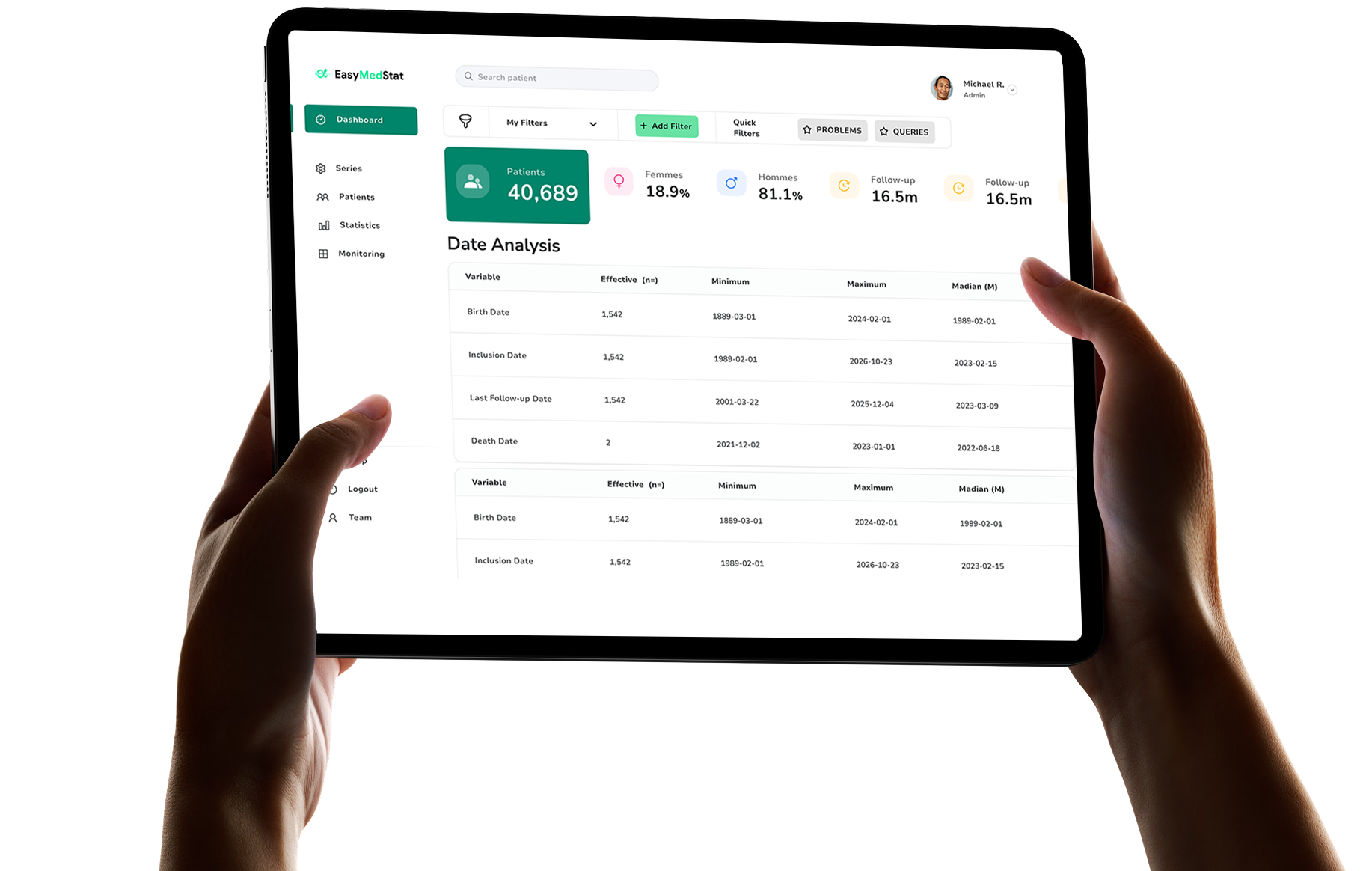
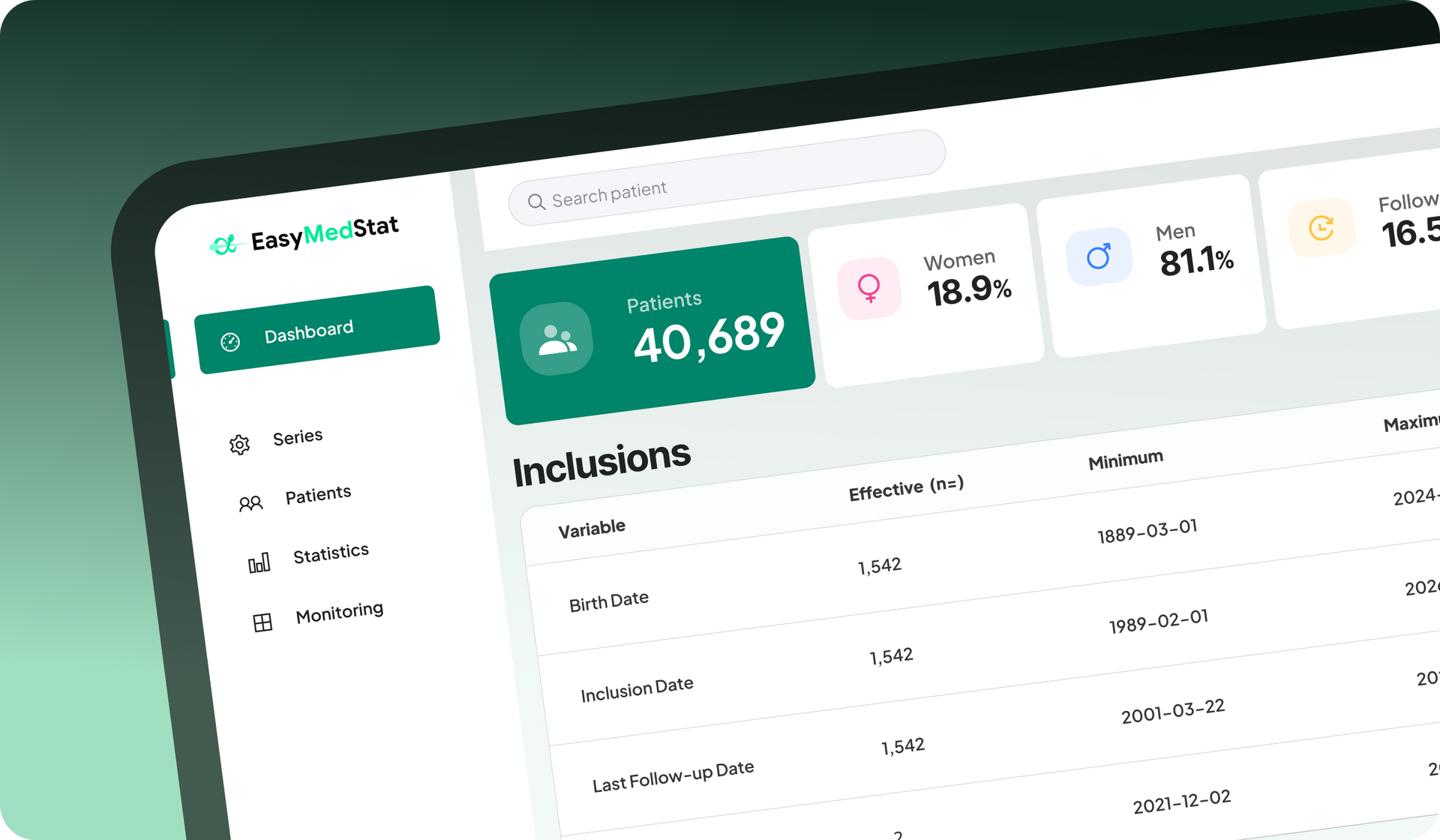
Real-time dashboards and indicators: Dashboards make it possible to track enrollment, site progress, missing data, and quality metrics, helping optimize clinical trial management.


Data export: An eCRF makes it easy to export data to major statistical software packages and can offer descriptive statistics or visualizations directly built into the platform.

Key Benefits of an eCRF

As a true partner in operational excellence, the eCRF secures data quality at the source through smart features such as required fields, validation rules, and consistency checks that eliminate obvious errors and ensure more reliable data.


Beyond data quality, adopting an
eCRF brings measurable benefits across the entire study:

Time saved throughout the study. Anomalies are identified faster, queries are resolved more efficiently, and time to database lock is reduced.


Stronger regulatory compliance: The audit trail, access rights management, and traceability of changes make it easier to meet the expectations of standards such as ISO 14155 or FDA 21 CFR Part 11.


Real-time study oversight: Since data is available instantly, teams can track enrollment progress, record completeness, and key indicators without waiting for monitoring visits.


Reduced operational costs: By limiting re-entry, errors, monitoring travel, and time spent on corrections, the eCRF helps lower the overall cost of the study.

What Criteria Should You Use to Choose an eCRF?

Choosing an eCRF depends on the needs of each clinical study.

Several criteria should be taken into account:


  • Platform ergonomics: Simple and quick to learn for investigators, CRAs, and data managers alike
  • Customization: The ability to build custom forms, validation rules, and conditional logic; a no-code solution gives teams more autonomy without relying on a developer
  • Regulatory compliance: FDA 21 CFR Part 11, ISO 14155, GDPR, audit trail, access rights, and electronic signature where needed
  • Available features: ePRO/eCOA, randomization, query management, monitoring, or a built-in statistics module for real-time analysis without exporting to external software
  • Support provided: quality of onboarding, training, and support, including migration from paper CRFs
  • Overall cost: beyond the license price, integration, training, maintenance, and add-on modules

Challenges and Best Practices

Implementing an eCRF may face resistance to change, cybersecurity concerns, and infrastructure constraints such as connectivity issues or a lack of equipment.

To make implementation easier, it is essential to involve field users in the design of the electronic case report form.


Documenting procedures such as data entry and validation, and offering structured training through tutorials, video sessions, and responsive technical support, are good practices to get the most out of the eCRF, improve data collection, accelerate studies, and meet regulatory requirements.

docteur remplissant un ecrf
July 22, 2026
Découvrez ce qu'est l'eCRF, ce qui le différencie d'un EDC, ses avantages, ses réglementations (RGPD, ISO 14155, FDA 21 CFR Part 11) et comment bien le choisir.
real time monitoring alerts
July 22, 2026
Discover EasyMedStat's Real Time Alerts: smart, customizable checks that catch data errors instantly and improve clinical trial data quality.
July 16, 2026
Deux nouvelles visualisations pour transformer vos données multidimensionnelles en informations exploitables
Show More
docteur remplissant un ecrf
July 22, 2026
Découvrez ce qu'est l'eCRF, ce qui le différencie d'un EDC, ses avantages, ses réglementations (RGPD, ISO 14155, FDA 21 CFR Part 11) et comment bien le choisir.
real time monitoring alerts
July 22, 2026
Discover EasyMedStat's Real Time Alerts: smart, customizable checks that catch data errors instantly and improve clinical trial data quality.
July 16, 2026
Deux nouvelles visualisations pour transformer vos données multidimensionnelles en informations exploitables
Show More

Share this article