What Is the Best EDC Software for Clinical Trials?
EDC software allows clinical research teams to design electronic forms, collect and validate clinical trial data, while ensuring data traceability and security. But when it comes to choosing EDC software for a clinical trial, one question quickly comes up: which one is the best?
The answer is not simply the software with the most features.
The best EDC software is above all the one that fits the protocol, the teams, the complexity of the clinical trial, and the project’s regulatory requirements.
A highly comprehensive solution may be unnecessarily complex for a simple study, while easy-to-use software may quickly show its limitations in a multicenter or highly integrated clinical trial. Making the right choice therefore requires looking beyond a simple list of features.
This guide outlines the key criteria to consider when choosing EDC software, the features that really matter, and the questions to ask EDC software providers.
What Makes a Good EDC Software?
EDC software, or Electronic Data Capture software, is used to electronically collect and manage clinical trial data.
It replaces processes that rely on paper forms or multiple independent files. Data collected from participants can be structured in eCRFs, checked using validation rules, and then reviewed and managed by the teams responsible for clinical data management.
Modern EDC software can also include additional features such as ePRO questionnaires, monitoring, dashboards, integrations with external systems, and statistical analysis.
An eCRF is therefore one component of an EDC system. EDC software covers a broader scope of clinical data management.
Why Is Choosing the Right EDC Software Important?
The choice of EDC software directly affects how data is collected, validated, monitored, and used throughout a clinical trial.
Poorly suited software can lead to:
- more manual work;
- lengthy or difficult configuration and changes;
- challenges for investigators and site staff;
- the need to use multiple tools;
- a higher risk of data entry errors;
- more complex query management;
- additional delays before data can be analyzed.
By contrast, well-suited EDC software can centralize clinical trial data and related processes, improve data quality, and make it easier for the different teams involved in the clinical trial to work efficiently.
What Features Should You Look for in EDC Software?
The features of EDC software should first and foremost support the study protocol and its processes. The number of available features matters less than their ability to work together and meet the specific needs of your clinical trial.
1. eCRF Design and Management
The eCRF is at the heart of clinical data collection. It can include the visits, variables, inclusion criteria, endpoints, questionnaires, validation rules, and conditional logic defined by the protocol.
One key question is: What happens when the protocol changes? A clinical trial may require modifications before or during its conduct. EDC software should therefore allow forms and data collection rules to evolve without turning every change into a complex IT project.
A
no-code interface can be particularly valuable for teams that want to remain autonomous. It can also make it easier to reuse variables, forms, or questionnaires when an organization is conducting multiple clinical trials.
2. Data Quality Control
Electronic data collection does not automatically guarantee data quality.
EDC software should also allow teams to detect errors, inconsistencies, and missing data.
Key features to assess include:
- validation rules;
- consistency checks;
- missing data management;
- queries;
- correction tracking;
- change traceability;
- data review tools.
Monitoring is also an important part of the quality process. A good EDC software should allow teams to monitor clinical trial data and quickly identify issues requiring action.
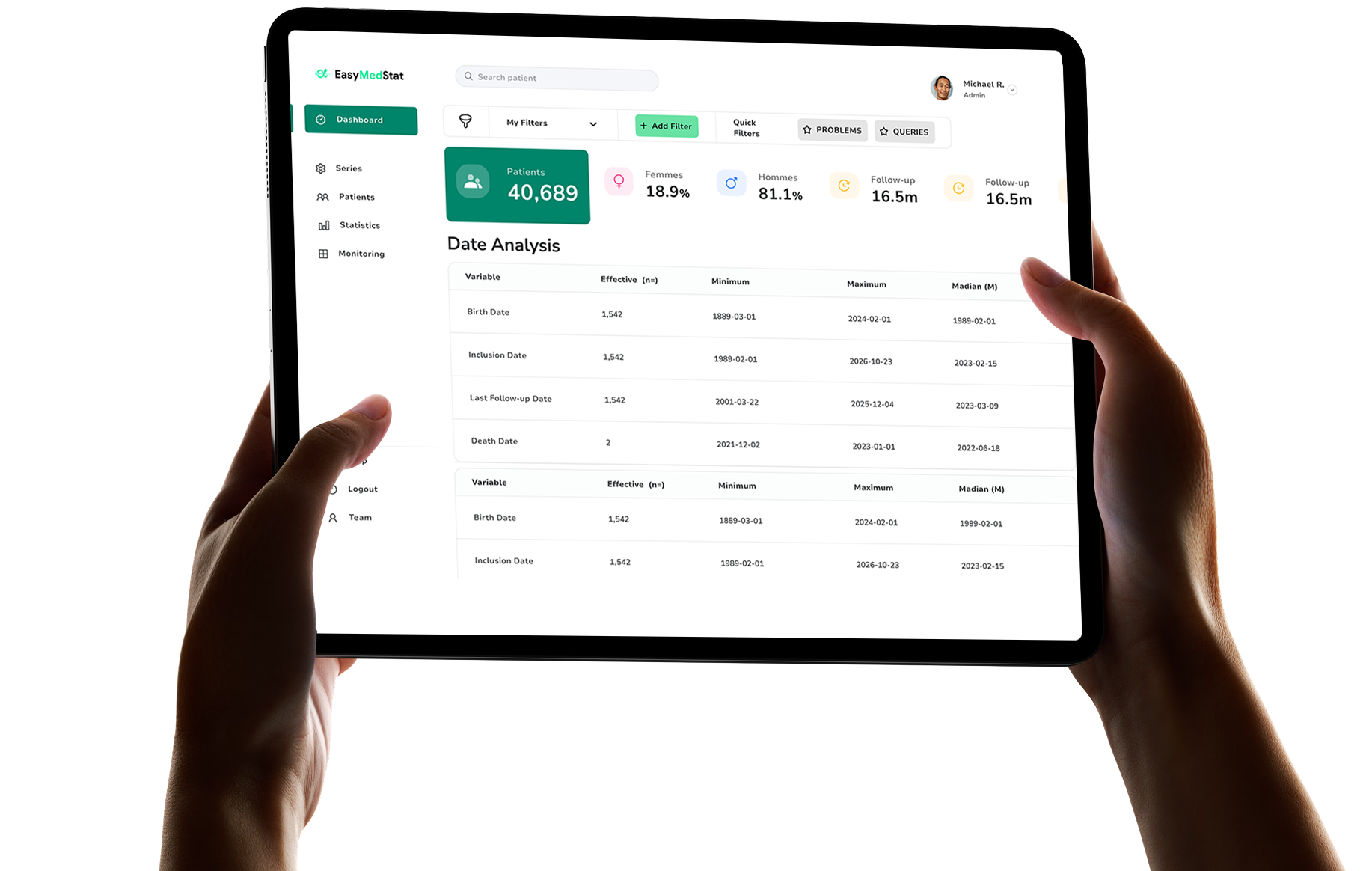
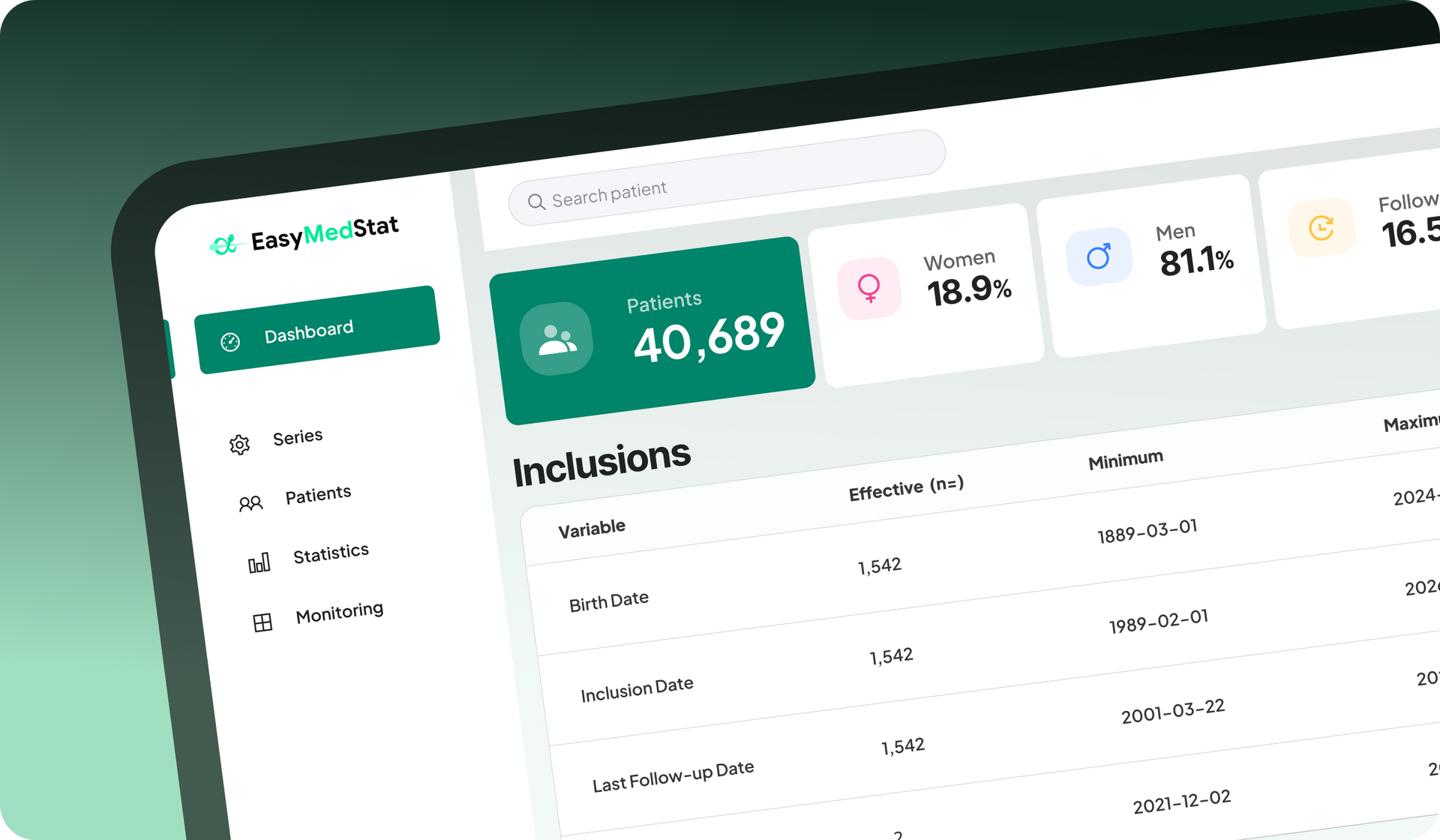
EasyMedStat includes
monitoring capabilities designed to centralize data review and query management.
3. Audit trail
Changes made to data should be traceable. The audit trail maintains a history of actions performed in the system. It allows teams to track changes made to data and maintain a record of operations performed throughout the clinical trial.
This level of traceability is an essential feature of EDC software used in a regulated clinical research environment.
4. Multicenter Clinical Trials
A multicenter clinical trial adds an organizational dimension to clinical data management.
Multiple sites may be involved in data collection, and users may have different roles. Some users may only need access to a single site, while study coordination teams need to oversee the entire clinical trial.
EDC software should therefore allow teams to manage sites, users, permissions, and the associated processes. Monitoring and query management also become increasingly important as the number of sites grows.
5. Integrations and API
A clinical trial rarely relies on a single IT system. Depending on the protocol and the organization of the study, data may be distributed across multiple software systems or originate from different sources.
Some data may come from a medical device, a laboratory, or another information system. It may also need to be transferred to other environments after collection.
Integration capabilities become particularly important as data volumes increase. Without automated data exchanges, teams may have to perform multiple exports, imports, and manual data entries. These operations take time and can also introduce errors.
Well-documented APIs and import/export mechanisms can therefore help support the scalability of the clinical data environment.
6. ePRO and eCOA
Not every clinical trial requires ePRO. However, when patient-reported data play an important role in the protocol, integrating EDC software with ePRO can significantly simplify study management.
ePRO allows participants to complete electronic questionnaires directly, often at different time points defined by the protocol. These data can then complement the information entered by investigators in the eCRFs.
When selecting EDC software, it is therefore important to look beyond the simple availability of an ePRO module. Teams should also consider how questionnaires are configured, scheduled, and linked to other clinical trial data, as well as how missing data are managed.
When these elements are managed within the same environment, teams can reduce the number of tools they need and simplify overall data monitoring.
7. Data Cleaning and Analysis
Data collection is not the final step in the data lifecycle. Data generally need to be reviewed, cleaned, and then analyzed.
Some organizations use several specialized software solutions for these different activities. Others prefer to bring part of the process together within the same environment.
EDC software can, for example, include data cleaning, visualization, or statistical analysis capabilities. The value does not necessarily lie in the number of statistical tests available.
The key question is how many steps are required to turn collected data into usable data.
What Are the Main Benefits of an EDC Software?
Reduce Manual Work
Without a suitable EDC system, teams may have to run checks after exporting data, manage queries through email, or maintain separate files to track issues.
EDC software can bring these tasks together in one environment. Validation rules can flag potential issues during data entry, while centralised query management helps teams track outstanding questions and corrections.
This reduces repetitive tasks and gives clinical research teams more time to focus on data review and study oversight.
Improve Data Quality
Errors are easier to correct when they are identified early.
Validation rules and consistency checks can help identify certain issues during data collection.
Monitoring complements these controls by allowing teams to review data that require further action.
The goal is not to eliminate human review. It is to focus that review on the data that actually require attention.
Accelerate Clinical Trials
The time required to implement EDC software depends largely on how the clinical trial needs to be configured. When eCRF creation requires significant development work, each modification can extend the timeline.
No-code configuration tools can reduce this technical dependency. Teams can build, test, and modify part of their data collection environment more quickly.
Simplify Investigators’ Work
The quality of EDC software also depends on the experience of the people using it.
A complex interface increases the time required to enter and correct data.
It can also increase training and support requirements.
The most common tasks should therefore remain straightforward: entering data, correcting information, responding to a query, or finding a visit.
Centralize Data and Processes
Using multiple software solutions is not necessarily a problem. However, each additional tool can create another data transfer, authentication step, or process to maintain.
EDC software can centralize some of these operations.
This allows teams to retain more context around their data and reduce certain gaps between data collection, validation, and analysis.
What Level of Security and Compliance Should You Expect from an EDC Software?
EDC software handles personal and health data. Security should therefore not be considered an optional feature. Access should be controlled and actions should be traceable. Data should be protected during storage and use. Applicable requirements depend on the type of clinical trial and the countries involved.
These may include Good Clinical Practice, ICH-GCP, GDPR, ISO 14155 for certain clinical investigations of medical devices, or FDA 21 CFR Part 11 where applicable.
The assessment should focus on concrete elements: role and permission management, authentication, audit trails, backups, hosting, electronic signatures where required, and validation documentation.
It is not enough to ask whether EDC software is "compliant". You need to understand how the requirements applicable to your clinical trial are addressed by the software and its documentation.
What Level of Support Should You Expect from an EDC Software Provider?
Software quality is only one part of the overall service. The level of support can have a direct impact on the time required to set up a clinical trial and resolve issues that arise during the study.
Some teams look for a highly autonomous solution. They want to be able to create eCRFs, modify forms, and manage their clinical trial without constantly depending on the provider. Others prefer to outsource more tasks, such as initial configuration, CRF setup, training, or support throughout the clinical trial.
An EDC software provider may therefore be involved at several stages: environment design, configuration, training, user support, protocol amendments, integrations, data exports, or study closeout.
The right level of support depends on the resources available internally.
Easy-to-configure software can reduce reliance on support. High-quality support nevertheless remains essential when a clinical trial becomes more complex.
How Much Does EDC Software Cost?
The cost of EDC software is not necessarily limited to a license fee.
Total cost can depend on several factors, including initial configuration, number of clinical trials, number of patients, number of modules, integrations, training, support, study duration, and associated services.
Organizations may also need to consider the internal work required to manage the software.
What Is the Best EDC Software for Different Types of Clinical Trials?
There is no single EDC profile that fits every organization. Priorities vary depending on the clinical trials being conducted.
Academic Research
In academic research, autonomy and ease of configuration can be particularly important. Teams may have limited technical resources and conduct several different projects.
The ability to quickly build an eCRF, reuse certain structures, and manage data within the same environment can reduce the work required to launch each clinical trial.
CROs
A CRO often needs to manage multiple clinical trials, sponsors, and sites in parallel. EDC software must therefore allow teams to configure new protocols quickly while maintaining standardized processes.
Monitoring capabilities are particularly important. They should allow teams to track site progress, identify missing or inconsistent data, manage queries, and monitor their resolution.
Reusing forms, variables, or validation rules can also reduce the time required to launch new clinical trials.
EDC software must therefore combine flexibility across protocols with centralized visibility into the execution of each clinical trial.
Medical Device Manufacturers
Medical device manufacturers may have specific needs related to clinical investigations and post-market surveillance.
Some clinical trials may last several years. Continuity of data collection, data traceability, change management, and longitudinal follow-up can therefore become particularly important.
For PMCF studies, the choice of EDC software should also take into account the data collection plan and the regulatory requirements applicable to the medical device.
Specialized EDC Software or an Integrated Platform?
An organization can build its clinical data environment in two ways.
It can use several specialized tools: eCRF software for data collection, an ePRO solution for patients, another system for certain monitoring activities, and statistical software for analysis. This approach allows teams to select a specialized tool for each specific need.
However, it also requires teams to manage data exchanges between multiple environments.
More integrated software can bring more functions together within a single system. This can reduce the number of data transfers and simplify certain processes. It does not mean that an integrated platform is always the better choice.
The right level of integration depends on the protocol, existing systems, and how the teams are organized.
The question is therefore not how many software solutions are being used. It is whether the data journey remains simple, controlled, and traceable from collection through to analysis.
Why Choose EasyMedStat?
EasyMedStat brings together several clinical data management capabilities within a single software environment. Teams can create no-code eCRFs, manage ePRO/eCOA data, monitor clinical trial data and queries, and use data cleaning and statistical analysis capabilities.
This approach brings several stages of the data lifecycle closer together: study design, data collection, validation, data cleaning, and analysis. It can also give teams greater autonomy when configuring their clinical trials and allow them to integrate third-party data through APIs.
The choice of EDC software nevertheless depends on the protocol.
The best way to evaluate the solution is therefore to start with a real clinical trial: CRF structure, users, data collected, monitoring requirements, ePRO, integrations, and planned analyses.
Curious to see how EasyMedStat can adapt to your clinical trial?


Share this article